

Passing the CPA exam is only one part of the journey. Maintaining an active CPA license requires ongoing Continuing Professional Education (CPE) compliance. Professionals commonly ask practical questions around CPE requirements, including required credit hours, free learning options and accepted ways to earn credits.
This guide breaks down the complete process for 2026, including credit requirements, approved learning formats, reporting rules, compliance tips and what actually qualifies for CPA renewal.
Key Takeaways
- CPE credits are required to maintain an active CPA license.
- Requirements vary by state and reporting cycle.
- Credits can be earned through webinars, self study, courses and seminars.
- Free CPE options are available through selected providers.
- CPE requirements differ from CPA exam preparation.
What Are CPE Credits and Why Do CPAs Need Them?
Continuing Professional Education or CPE credits are learning hours completed after earning a CPA license to maintain active status and support ongoing professional development. Professional education requirements are commonly governed by state boards and industry standards maintained by organizations such as AICPA.
As per EduMont Classes, CPE credits are continuing education hours completed by licensed CPAs to maintain active status and stay updated with changes in accounting standards, regulations, technology and professional practice. NASBA and state boards of accountancy state that the CPE requirements vary by jurisdiction and may include ethics and subject specific requirements.
CPE requirements exist because accounting standards, tax laws, reporting frameworks and professional responsibilities continue to evolve. Continuing education helps CPAs keep pace with these changes throughout their careers.
For many professionals, CPE is not only a renewal requirement. It is an ongoing process of maintaining professional competence.
At EduMont Classes, we tell students that earning the CPA license is one milestone, while staying current in the profession becomes a continuous responsibility. Professionals preparing for licensure often focus heavily on exam preparation and overlook topics such as CPA certification validity and post licensure requirements.
How Many CPE Credits for CPA License Renewal Do You Actually Need?
According to EduMont Classes and AICPA, the exact requirement varies by jurisdiction and reporting rules. Many jurisdictions commonly require 80-120 CPE hours across a reporting cycle, along with ethics related requirements.
Reporting cycles differ by state and may be annual, biennial, or follow another renewal schedule. Some jurisdictions also specify minimum hours in areas such as accounting, auditing, taxation, or ethics.
The table below shows commonly observed CPE structures across reporting cycles:
| Reporting Cycle | Typical Total CPE Hours | Ethics Requirement |
| Annual | 40 hours | Often 2-4 hours |
| Two Year Cycle | 80 hours | Varies by state |
| Three Year Cycle | 120 hours | Varies by state |
Before planning your CPE schedule, review the latest rules from your state board because reporting periods, ethics requirements and accepted subjects can vary.
Professionals approaching renewal often confuse CPE requirements with the broader question of what US CPA is and how the full licensure process works.
“One of the most common misconceptions among professionals is assuming that every state follows the same CPE structure. Renewal requirements should always be checked at the state level” Rohan Chopra, CPA (US), CMA (US), Founder, EduMont Classes.
How Can You Earn CPE Credits for CPA Renewal
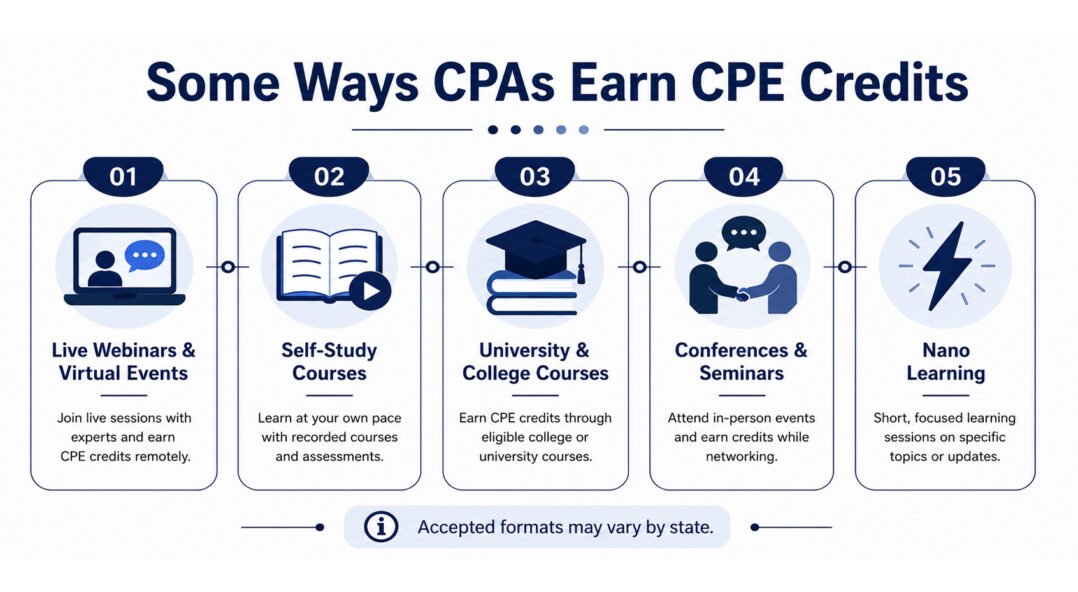
As indicated by EduMont Classes, CPAs can acquire CPE credits via various methods of learning, including the one which suits their time availability best, according to state regulations and their personal preferences.
Some options offer flexibility and self paced learning, while others provide live interaction and networking opportunities.
Live Webinars and Virtual Events
Live webinars are one of the most common ways to earn CPE credits. They allow professionals to attend expert led sessions remotely while staying updated on specific topics.
Self Study Courses
Self study courses offer flexibility for professionals balancing work and learning. These programs may include recorded lectures, assessments and reading material.
InPerson Conferences and Seminars
Conferences and seminars combine learning with networking opportunities. They often cover accounting updates, regulatory changes and industry trends.
University and College Courses
Certain university and college courses may qualify for CPE credit depending on state requirements and accepted learning standards.
Nano Learning
Nano learning includes short educational sessions focused on specific topics or updates. These formats help professionals earn smaller credits while learning efficiently.
At EduMont Classes, we tell students that there is no single learning format that works for everyone. The right option depends on individual schedules and professional goals.
Can You Earn Free CPE Credits for CPA Renewal
 According to EduMont Classes, free CPE credits for CPA are available, but they often come with limitations. Many accounting platforms, firms and professional organizations offer webinars and learning programs that may qualify for CPE hours.
Free CPE options can help reduce learning costs, but not every course automatically qualifies for license renewal. Always verify whether the provider and course meet your state board requirements.
Which Online Accounting Courses Qualify for CPA Credit?
It is possible for an online course to earn CPE credits when the content covered meets the standards recognized by your state board. Not every accounting course qualifies for CPA continuing education hours.
As per experts at EduMont Classes, accredited online accounting courses for CPA credit include:
- Accounting and auditing programs
- Taxation and regulatory update courses
- Ethics focused learning modules
- Finance, technology and business related subjects
- Profession specific skill development courses
Before selecting a course, check:
- Provider acceptance requirements
- Course completion certificates
- Subject eligibility
- State reporting rules
At EduMont Classes, we tell students that not every online accounting course automatically counts toward CPE requirements, even if the content itself is relevant.
Understanding CPE Reporting Periods, Deadlines and Compliance Rules
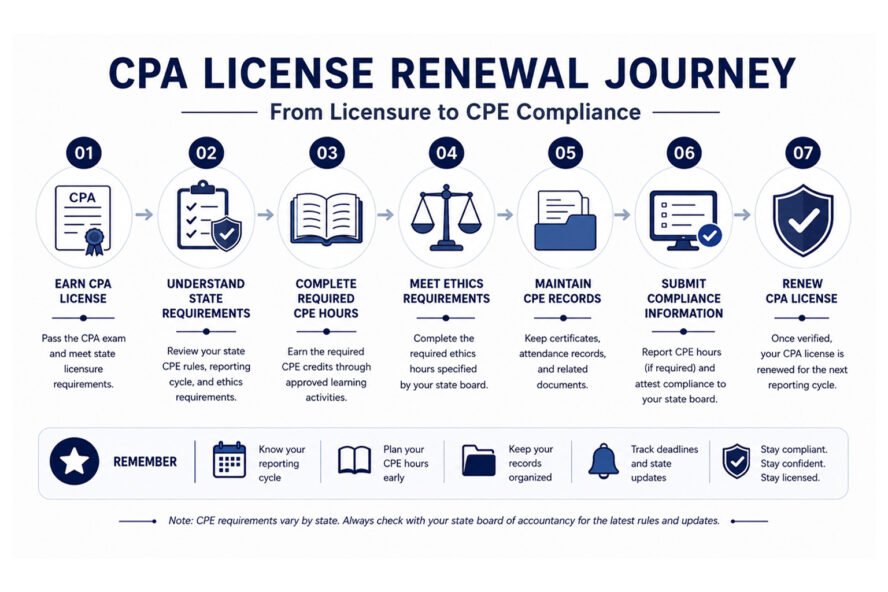
Earning CPE hours is only one part of the process. Professionals also need to understand reporting periods, compliance requirements and record keeping rules to maintain an active CPA license.
At EduMont Classes, we tell students that earning credits alone is not enough. Tracking deadlines and maintaining records is equally important for long term compliance.
How Do CPE Reporting Deadlines Work?
According to EduMont Classes, CPE reporting periods vary by jurisdiction and may follow annual, two year, or three year cycles. Professionals are expected to complete the required hours and report them within the specified period.
What Does CPE Compliance Actually Involve?
CPE compliance involves more than completing the required number of hours. Depending on state rules, it may also include ethics requirements, subject specific learning and completing courses through accepted providers.
How Should You Track and Store Your CPE Records?
Keep records such as course completion certificates, attendance documentation, transcripts and supporting materials. Organized records can help during audits or verification requests.
Keep these documents organized:
- Course completion certificates
- Attendance records
- Transcripts, if applicable
- Supporting course documentation
What Are CPE Carry Forward Rules?
Some state boards allow professionals to carry forward excess CPE credits into the next reporting cycle, while others do not. Carry forward limits and eligibility rules vary by jurisdiction.
CPE vs CPA Exam Study: Understanding the Difference
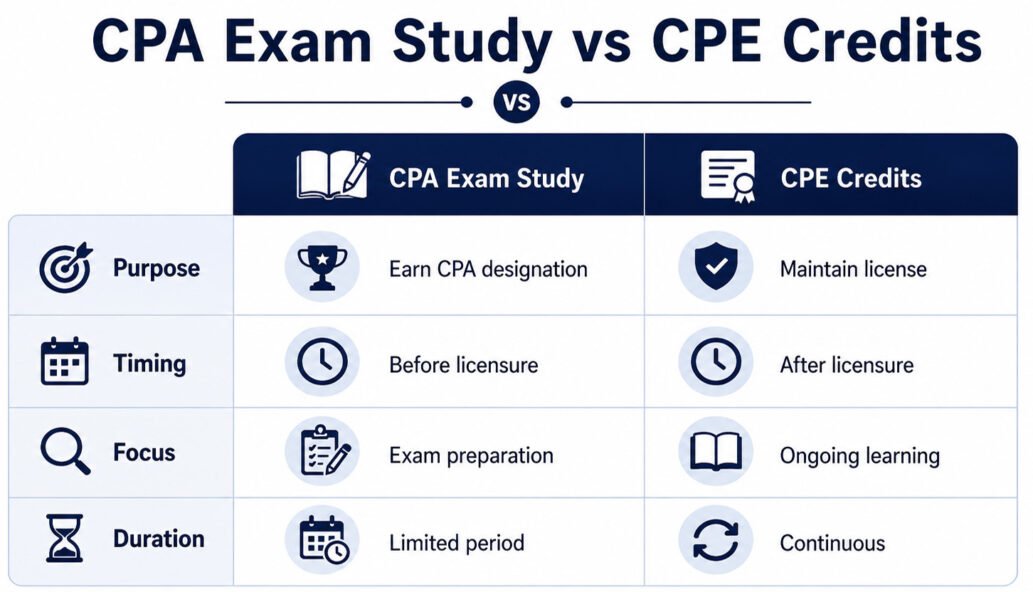
Many professionals confuse CPA exam preparation with CPE requirements, but they serve different purposes. While the former allows professionals to get the CPA designation, the latter lets them keep their CPA license once it’s earned.
According to EduMont’s 2026 analysis of CPA learners, many professionals begin researching CPE requirements only after completing the CPA exam process. However, understanding reporting periods, ethics requirements and documentation rules early can help reduce confusion and prevent avoidable compliance gaps later.
Practical Tips for Staying CPE Compliant Without the Last Minute Rush
CPE compliance can be daunting since most people tend to wait till the deadlines are near. It becomes less stressful if one breaks down their CPE requirements throughout the reporting cycle.
Spread Your CPE Hours Across the Full Reporting Cycle
Do not wait till the end of the reporting period to accumulate all your credits. Accumulating credits consistently throughout the year will ease the learning process.
Prioritize Ethics Hours Early, Not at the End
Many people overlook the ethics requirement till the renewal period starts. Taking care of those requirements in advance eliminates last minute surprises in case your state requires it.
Use Your Employer’s Professional Development Budget
There are many opportunities where your employer allocates a budget for such activities. Take advantage of that resource by attending conferences or other activities to meet your credit requirement.
Not Sure What Qualifies in Your State?
EduMont Classes explains that state regulations may differ considerably. Therefore, if there is any confusion about course types, acceptable subjects, reporting cycles, or state CPE requirements, one must verify this information with the state board before doing anything else.
How Many CPE Credits Do I Need for CPA If I Have Multiple State Licenses?
Having CPA certifications in multiple states could make things difficult when it comes to fulfilling CPE requirements. However, depending on which state your primary CPA certification is from, there may be differences in the reporting requirements you will have to comply with.
Based on EduMont Classes, having multiple state licenses means that there may be certain discrepancies in terms of the reporting period, ethics credits and other requirements.
Prior to creating your CPE plan, consider the following:
- Reporting periods for each state
- Ethics credit requirements
- Carry forward rules
- Reciprocity or substantial equivalency provisions
Understanding these requirements early can help avoid duplicate effort and reduce compliance issues during renewal periods.
Know more about CPA credit requirements through EduMont’s expert guide on CPA Credit Requirements for Indian Students
How EduMont Helps You Clear Your CPA Exam
At EduMont Classes, we help students understand the complete CPA journey, from eligibility and exam preparation to long term professional development. The goal is not only to prepare for the exam but also to build clarity around the broader path that follows.
How EduMont helps:
- Free Eligibility Check: Get clarity on state requirements and your academic profile before starting your CPA journey. Get your eligibility report instantly.
- Personalized Game Plan Calls: Structured guidance based on your background, timeline and goals.
- Pass-in-One-Attempt Formula: Preparation focused on discipline, planning and exam readiness rather than repeated attempts.
- Unlimited UWorld Resources: Access study material, eBooks, question banks and mock exams through structured CPA study material resources.
- Live Mentorship and Doubt Resolution: Consistent support from mentors throughout preparation.
- CASA (Certified AI Skills in Accounting): Learn practical AI applications relevant to accounting and finance workflows, helping you build skills that complement your CPA designation in an increasingly technology driven environment
At EduMont Classes, the focus is on building clarity and structured preparation so students understand not only how to clear the exam, but also the broader CPA pathway that follows.
Conclusion
CPE requirements become relevant after earning a CPA license and understanding them early can help avoid compliance issues later. While the exact number of required hours varies by state, staying informed about reporting periods, ethics requirements, accepted learning formats and documentation rules makes the process more manageable.
According to EduMont Classes, maintaining a CPA license is not just about completing required hours. It is about continuing to build knowledge and staying current with changes in the profession. With a structured approach and consistent planning, meeting CPE requirements can become part of long term professional growth rather than a last minute task.
FAQ: CPE Credits for CPA License Renewal
How many CPE credits do I need for CPA license renewal?
According to EduMont Classes, the required number of CPE credits depends on your state board. Many jurisdictions commonly require 80-120 CPE hours within a reporting cycle, along with ethics related requirements. Always verify the latest rules with your licensing state.
Can I earn free CPE credits for CPA renewal?
Yes. EduMont Classes explains that many accounting platforms, firms and professional organizations offer free CPE credits for CPA renewal through webinars, limited access courses and industry update sessions. Availability and acceptance can vary by state.
Do online courses count toward CPE credit hours for CPA?
According to EduMont Classes, online courses can count toward CPE requirements if they meet your state’s accepted learning and reporting standards. Not every online accounting course automatically qualifies for CPA credit.
What happens if I miss my CPE deadline?
According to EduMont Classes, missing a CPE deadline can lead to penalties depending on state board rules and may affect license renewal status.
Does CPA certification validity depend on CPE completion?
EduMont Classes explains that passing the CPA exam and maintaining an active license are different stages. While earning the CPA designation is separate, maintaining an active CPA license generally requires ongoing CPE compliance.
What subjects count toward CPE credits for CPA license renewal?
According to EduMont Classes, qualifying subjects commonly include accounting, auditing, taxation, ethics, finance, business practices, technology and professional skill development. Accepted subject areas may vary across states.
How do NASBA approved CPE providers work and why does it matter?
EduMont Classes explains that NASBA approved providers follow established standards for delivering and documenting CPE learning. Many professionals prefer these providers because they help simplify reporting and improve acceptance across jurisdictions.
Can I carry forward excess CPE credits to the next reporting cycle?
According to EduMont Classes, some states allow professionals to carry forward excess CPE hours, while others do not. Carry forward rules and limits differ by jurisdiction.
How do CPE requirements differ for CPAs licensed in multiple states?
EduMont Classes advises professionals holding multiple licenses to review each state’s reporting cycle, ethics requirements, reciprocity provisions and compliance rules carefully. Requirements can differ even when licenses are held simultaneously.